

You have finished writing your academic essay, however, before you proofread, you need to edit for organization, development, and focus. You have organized your content to ensure main ideas and supporting ideas are presented in the same paragraph. You have revised and strengthened content with supporting facts and more forceful arguments. You have improved the readability of your paper by determining who is your audience. If you are a high school or college student or professional, you have assumed that you are writing the paper for an audience of your peers. The level of your language reflected the audience to whom your paper is aimed.
You used short words, sentences, and paragraphs to keep your writing crisp. You juggled short and long sentences and transitions to improve the flow of your paper. You used short paragraphs to not overwhelm your readers. You used active voice rather than passive. You used fewer lengthy words and tried to be concise and crisp, to get rid of wordiness and to convey your message with clarity. After you have ascertained that the content of your paper and the language flow is to the best of your ability you need to proofread it. Errors that remain can cloud your intended meaning, so a thorough proofreading is necessary.
Proofreading is not easy
You have read your paper several times but it still does not meet your expectations. When you read someone else’s work the errors jump out at you, but you miss errors in your own work. Put your writing aside for a few days or a week and return to it with fresh eyes when you are ready to proofread. You should also print a hard copy of your paper as errors can be highlighted or circled, and you can write in the margins as you proofread. Ensure that you save your work. As you proofread, you look for errors of grammar, punctuation, spelling and word choice. You can enhance this process by using online and offline resources such as:
- www.grammarly.com
- Merriam-Webster
- The Little Brown Handbook
- The Elements of Style
As a writing teacher for over thirty-five years at both the secondary and tertiary levels, I share ten tips that are very important to proofreading your academic essay.
Proofreading Made Simple – the 10 tips I recommend
1) Use a spellchecker
Often it is easy to miss repeated words, and common spelling errors. These can be minimized when you utilize a spell checker.
2) Use a dictionary
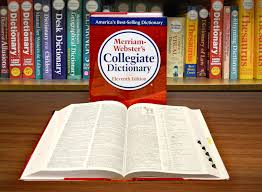 Your spellchecker can help to identify incorrectly spelled words, however, it will not always give the correct word for the context. An example is if you are unsure if whether the correct word is complement or compliment.
3) Proofread each word
Place a sheet of paper over your paper so that it exposes only one sentence at a time. This helps you to proofread each line separately, and helps you to focus on each word separately.
4) Read text backward
Reading backward can also help you identify spelling errors as you focus on individual words. Begin with the final word and read from right to left.
5) Read your text orally
Reading the text orally provides audible feedback, allowing the misplaced words or phrases to be identified.
6) Review using a hard copy
Give your paper a word -by -word review to catch homophone (their/there) and other tricky errors that cannot be discerned by computer spell checkers.
7) Look for one type of error at a time
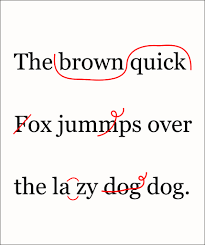 As you read through your text look for one type of error at a time. For example look for each type of error separately: word choice, spelling, punctuation, and grammar.
8) Use your created checklist
It is wise to create a checklist of common errors that you frequently observe in your writing. As you proofread, your work several times to ascertain you correct any of these common grammar or syntax errors that you find.
9) Ensure correct research formatting
The hallmark of academic writing (research papers or theses) is that it needs to be anchored in research. Your paper needs to be based on credible information. As you proofread you need to ensure that citations and footnotes are correctly placed and formatted. If your paper has to be formatted according to a specific style such as the American Psychological Association (APA) format, have someone who is familiar with this style proofread your paper.
10) Ask a Friend or Colleague for Help
In our circle of family and friends, there is usually someone who can provide feedback and review your work. This person may find errors that you overlooked.
Follow these tips and your messages, thoughts, arguments, are sure to be well received.
Need further assistance to make your work flawless?
Just submit your work to our academic editing services. A thorough editing and proofreading can improve the quality of your writing, improve your grade and make it not only worth reading but readable.

Excellent advice, thank you. I may need some assistance with editing my essays.
Abi,
Thank you for your interest in our proofreading services. I will be delighted to assist. Just follow the instructions for submission and payment and I would be delighted to help you.
Dr. S.